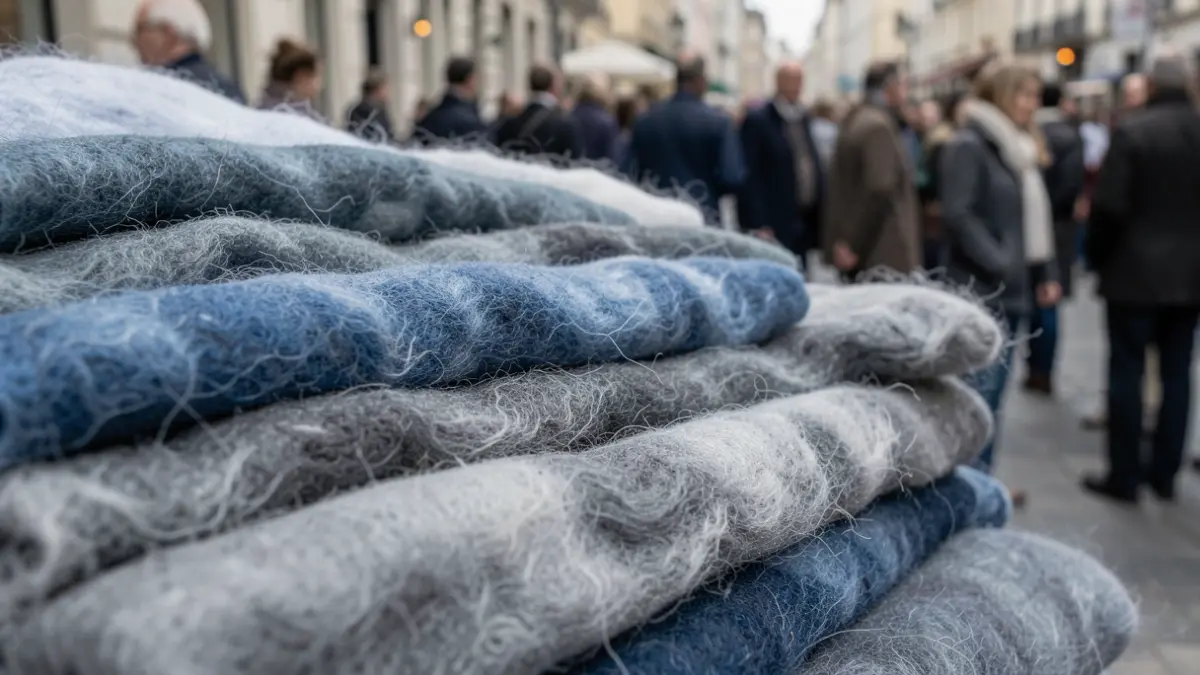
After two years of research and development, IsoFabric has started selling its insulation made from recycled cotton fibers. This material, already used in projects like the future Odoo campus in Louvain-la-Neuve, aims to produce approximately 1,000 m3 by year-end and hopes to tenfold this figure in 2027.
The insulation offers comparable or superior thermal (lambda value of 0.039 W/m.K) and acoustic performance to traditional insulators. Adrien Liénard, co-founder of IsoFabric, highlights its suitability for office renovations. Tests conducted at ULiège also confirm its good fire reaction, approaching that of mineral wools in standard configurations.
Easy to install and healthy, IsoFabric insulation is priced at the market average or slightly below. Its manufacturing process, primarily mechanical with minimal thermal energy use, makes it less susceptible to energy price fluctuations.
A key feature is its circular and solidarity dimension. The material revalorizes textile waste, a growing global problem (only 1% recycled out of 92 million tons annually). IsoFabric collects this waste in Belgium and processes it in Northern France, with the goal of centralizing production in Belgium.
The company is seeking technical approval (ATG) to access public markets and is looking for financial support. In the meantime, they invite pioneering public clients to trial their insulation. Judith Van Parys, co-founder, also mentioned exploring new avenues with other recycled textile materials.
The IsoFabric project is supported by the RENOBATEX call for projects, launched by Wallonia in 2023 as part of the Recovery Plan, aimed at promoting energy sobriety and housing renovation.