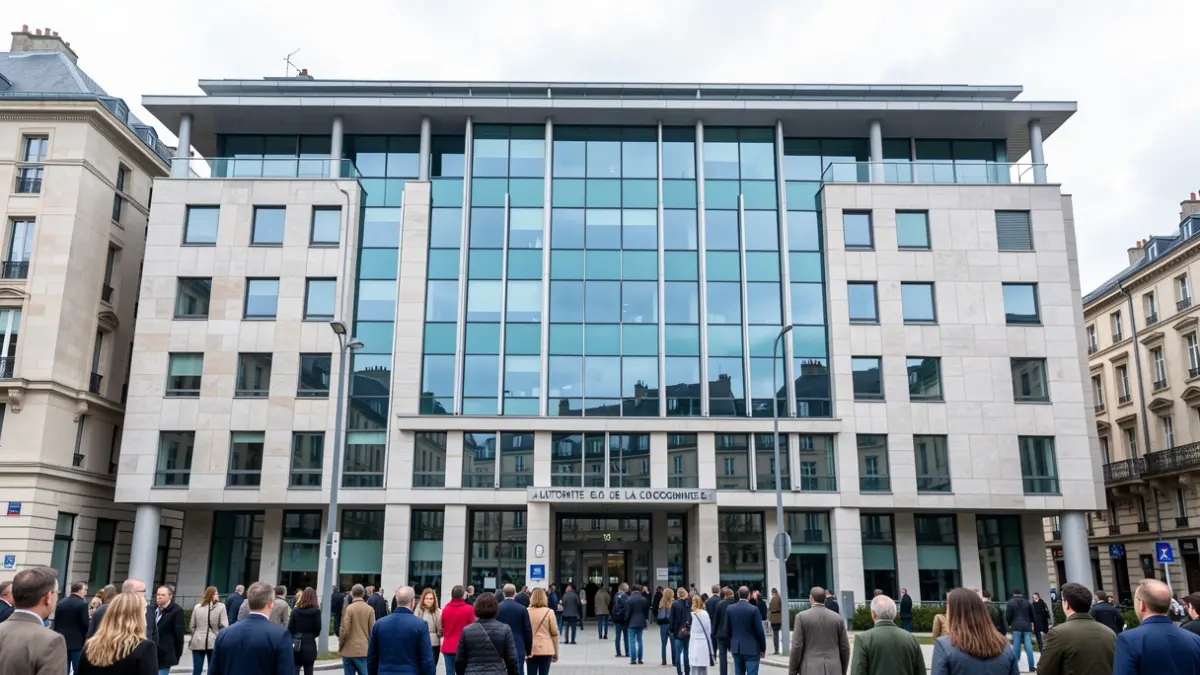

The 'Meet & Greet' event on September 15, 2026, fostered dialogue between supply and demand in circular public procurement. The gathering aimed to share inspiring experiences and collectively identify barriers and levers for integrating the circular economy into public markets. The upcoming European regulation, which will no longer allow price to be the sole award criterion, was highlighted as a key driver for introducing environmental quality criteria.
The University of Liège presented its gradual approach to sustainable procurement. Recognizing that approximately half of its CO₂ emissions were linked to its purchases, the institution has progressively integrated sustainability criteria into various public tenders, including reconditioned computers and office supplies. This step-by-step approach, coupled with initial user choice to facilitate adoption, was illustrated by Anne-Catherine Colson and Sophie Blain.
Regarding the cost of circular products, often perceived as higher, Rob Renaerts, an expert at Coduco, emphasized the importance of the Total Cost of Ownership (TCO). This approach, which considers maintenance, repairs, and end-of-life management, often demonstrates significant long-term economic advantages for circular solutions. Product quality remains the primary criterion for users, with circularity being a complementary benefit.
Roundtable discussions focused on IT and electronic equipment, as well as furniture and interior design. Recurring obstacles identified include user resistance to change, doubts about the quality of reconditioned products, lack of knowledge about available solutions, difficulty in drafting objective environmental criteria, fear of appeals in public procurement procedures, the significant weight of price, risks of greenwashing, and concerns about equipment safety and component traceability. Overly prescriptive tender specifications were also noted as limiting innovative solutions.
To drive practice change, several solutions were proposed: integrating more objective, measurable, and verifiable criteria into tenders; prioritizing functional needs over detailed technical specifications; developing training for buyers and awareness for end-users; facilitating site visits and experience sharing; providing catalogues of sustainable solutions; and incorporating repairability and modularity from the market design stage. Earlier dialogue between public buyers and suppliers was also stressed, particularly for reconditioned IT equipment, where adapted warranties and traceability mechanisms build trust.
This edition of Meet & Greet confirmed the growing interest in circular public procurement and the need for enhanced collaboration among all stakeholders. The event was co-organized within the framework of the Circular Wallonia strategy and the responsible public procurement strategy of the Service public de Wallonie.