
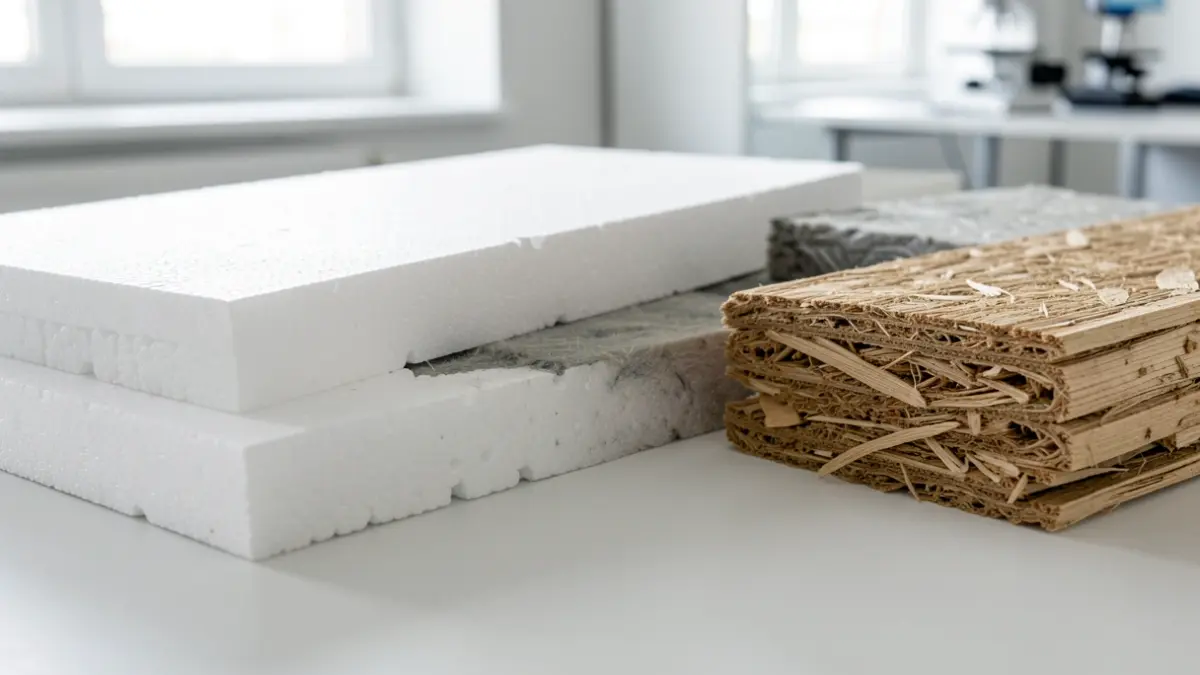
Efficient and reliable insulation products are essential for improving the energy performance of Europe’s buildings, while reducing greenhouse gas emissions and energy bills. Laboratory testing of 6 types of insulation materials sampled in 14 countries revealed that one third did not meet their declared performance.
The results of this EU-funded campaign underline the value of market surveillance and the need for end users to verify performance information before selecting insulation products. The project was carried out with the participation of market surveillance authorities (MSAs) from 14 countries.
A total of 106 samples from 6 commonly used insulation materials were selected: expanded (EPS) and extruded polystyrene (XPS), mineral wool, cellular glass, wood wool and wood fibre. The samples were purchased in Austria, Belgium, Denmark, Finland, Germany, Greece, Ireland, Italy, Latvia, Malta, Norway, Poland, Portugal and Sweden, either from physical shops, online or directly from manufacturers.
The tests checked how well the materials slow down heat loss, whether their thickness matched the declared specification and how they react to fire. For thermal resistance, 31 of 97 samples tested (32%) did not meet the requirements. For reaction to fire, 11 of the 81 samples tested (14%) did not meet the declared class. Markings and documentation were also checked: 68 samples (64%) failed to meet the requirements, mainly due to an incomplete or missing Declaration of Performance (DoP) or CE marking.
Thermal resistance tests assessed whether insulation products deliver the level of heat retention their manufacturers claim. In most cases, the measured thermal performance differed from the values declared by the manufacturer, meaning some products may not provide the level of insulation that buyers expect. A smaller number of products also failed the thickness requirements.
Another cause for concern was the unexpectedly high number of failures among products declared as Class E for reaction to fire: 8 of 52 products (15%) in this group did not meet the declared fire classification. No failures were found among the 6 products declared as classes B–D. Both products declared as class A2 failed the applicable reaction-to-fire assessment. Only 1 of 21 A1-class products did not meet requirements.
MSAs classified 2 samples as high risk and 4 as serious risk, mainly related to fire performance not corresponding to the declared class. Sales bans were imposed on 1 product and 7 were withdrawn from the market. Many economic operators agreed to resolve conformity defects.
Consumers should look for products that carry the CE marking and are accompanied by a DoP. Before purchasing, they should check that the product is suitable for its intended use and complies with national building requirements. Following the manufacturer's installation instructions is equally important.
Vanessa Capurso, Policy Officer at the European Commission’s DG GROW, stated: “Market surveillance campaigns help protect consumers and ensure that reputable businesses are not undercut by competitors whose products do not meet their declared performance levels.”