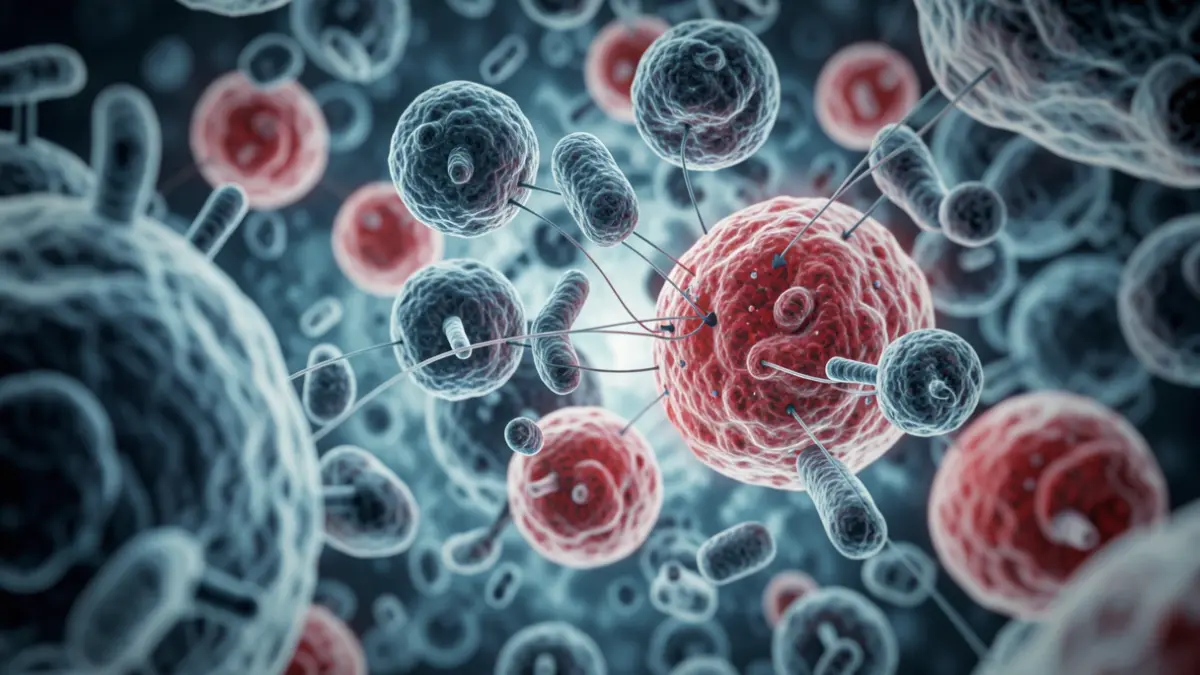
Most cancer-related deaths are due to metastases, where cancer cells leave the primary tumor to spread to other organs. This process, known as epithelial-mesenchymal transition (EMT), is facilitated by a more metastatic 'hybrid' state of cancer cells. The study, published in Nature Cancer, was led by Prof. Cédric Blanpain of ULB.
Tumors are composed of cancer cells and normal cells, including immune cells. Researchers observed that cancer cells in a hybrid EMT state are surrounded by neutrophils, while at a more advanced stage, they are surrounded by macrophages. Experimental elimination of neutrophils in mice led to a reduction in lung metastases, suggesting a key role in metastatic potential.
Neutrophils release oncostatin M, which drives cancer cells towards the hybrid EMT state. Macrophages release TGF1, which triggers EMT. These molecules, oncostatin M and TGF1, are identified as key regulators of EMT and metastatic spread.
Similar neighborhoods and this molecular dialogue were found in human cancers of the breast, pancreas, lung, and bladder, suggesting this mechanism is at play in at least some human cancers. These findings open new avenues for preventing metastases and improving response to cancer treatments.
The study was conducted by Prof. Blanpain's team (ULB) in collaboration with other teams from ULB and CHIREC. The research was supported by various Belgian and European institutions, including FNRS, the European Research Council (ERC), and the Horizon 2020 program.