
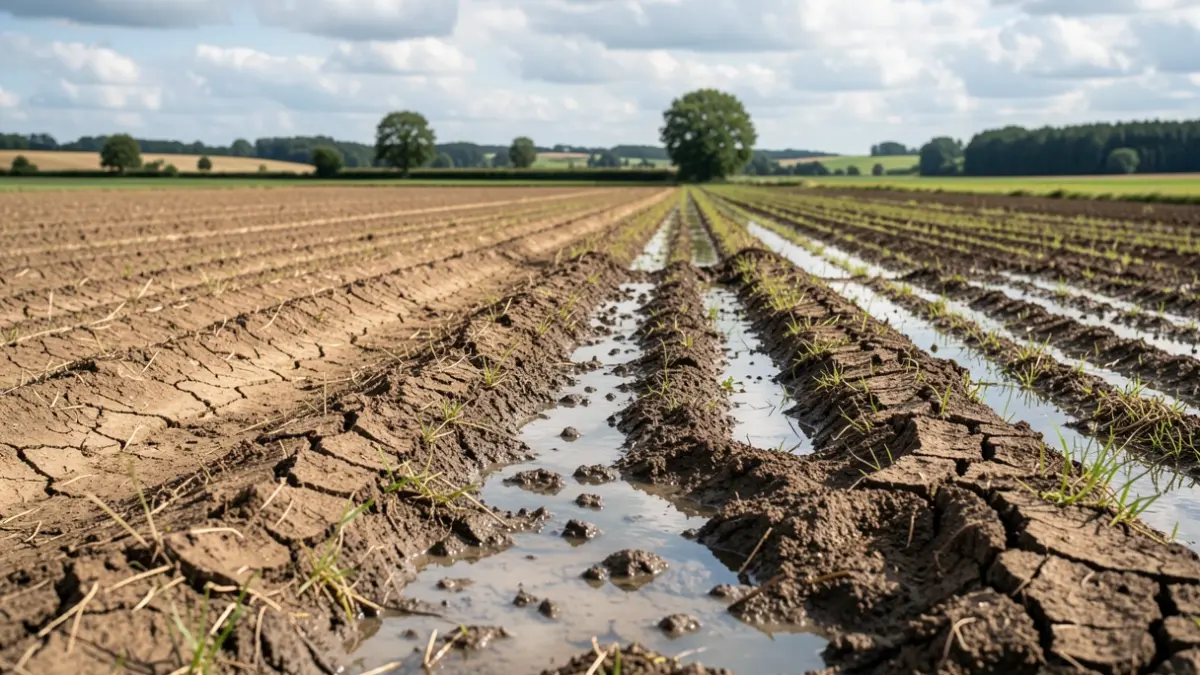
The 2026 summer crop season is drawing to a close across Europe, with harvesting well advanced. EU yield forecasts have changed relatively little and remain below the five-year average for most crops. Slight downward revisions were noted in some regions due to persistent adverse soil moisture conditions that reduced yields and delayed harvests.
The new winter cropping season faces contrasting challenges. Low soil moisture is hampering rapeseed emergence and winter cereal establishment in drought-affected regions, leading to uneven crop development. Conversely, excessive rainfall in the Baltic states and Finland has delayed winter crop sowing, potentially reducing the winter crop area, particularly in the Baltic states.
Forecast rainfall across most of Europe may improve soil moisture and support winter crop establishment, while drier conditions forecast in the Baltic states could help mitigate waterlogging.
Areas of concern include parts of western, central, and south-eastern Europe where low soil moisture is hindering rapeseed emergence and early development, raising concerns for winter cereal establishment. In contrast, prolonged rainfall in the Baltic states and Finland has caused soil waterlogging, delaying sowing and locally preventing harvest completion.
Persistent rainfall deficits have impacted rapeseed sowing and emergence in several regions, including France, southern Belgium, Luxembourg, and southern Germany. Winter cereal sowing has also progressed more slowly in parts of France and the Benelux countries. In Eastern Germany and western Poland, rainfall deficits since September raise concerns about crop emergence and establishment. Austria, the Czech Republic, Slovakia, Hungary, Slovenia, Croatia, western Romania, and north-western Bulgaria face persistent water deficits. In central and southern Italy, low soil moisture is constraining seedbed preparation.
In the Baltic states, persistent rainfall has led to waterlogged soils, bringing winter crop sowing to a standstill in some areas. The winter crop area is expected to decrease, with some fields potentially being sown with spring crops instead. In Finland, excessively wet soils have delayed the harvesting of spring and summer crops. Türkiye has also experienced above-average precipitation, slightly lowering the yield outlook for maize.
Impacts documented in earlier editions of the bulletin persisted through the end of the season across large parts of western, central, and south-eastern Europe. September rainfall offered some relief but arrived too late to reverse earlier yield losses.